소품 제작
KIMUNIVERSE — NEMO CREW Art Toy
Start Date
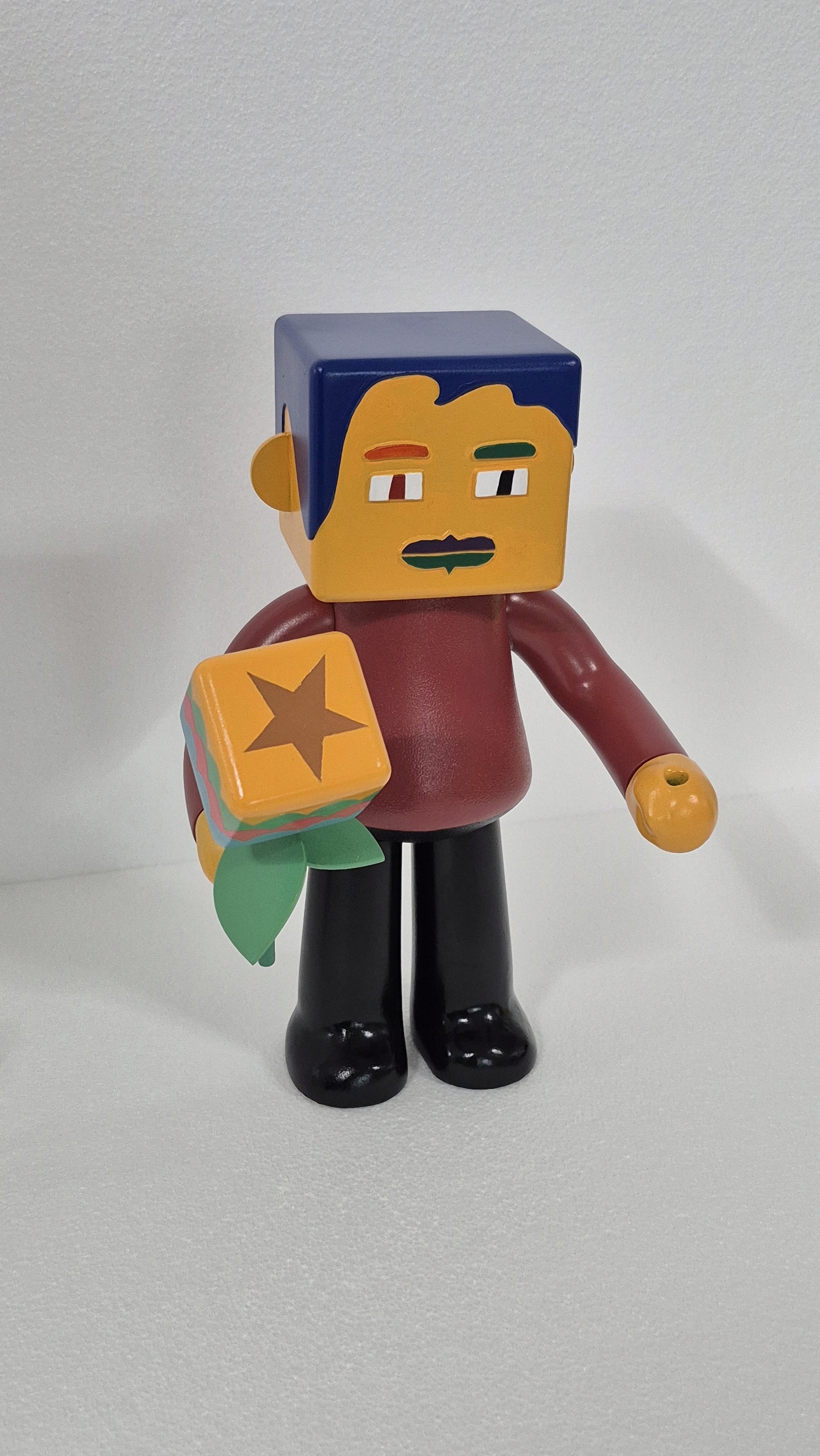
발달장애인 아티스트들의 창작 생태계를 확장해온 소셜 스타트업 키뮤스튜디오는 자사 캐릭터 IP '네모크루(NEMO CREW)'를 실물 아트토이 피규어로 구현하는 프로젝트 '키뮤니벌스(KIMUNIVERSE)'를 기획했다. 네모크루는 키뮤스튜디오 소속 발달장애인 디자이너들이 창작한 2D 기반 캐릭터 시리즈로, 네모난 얼굴과 기하학적으로 단순화된 조형 언어가 특징이다. 평면 원화 IP를 입체 오브제로 확장하고, 이를 통해 2030세대를 새로운 아트 소비층으로 끌어들이겠다는 비전 아래, Team Lorem은 3D 모델링부터 에어브러시 도색 완성까지 전 제작 공정을 담당했다.
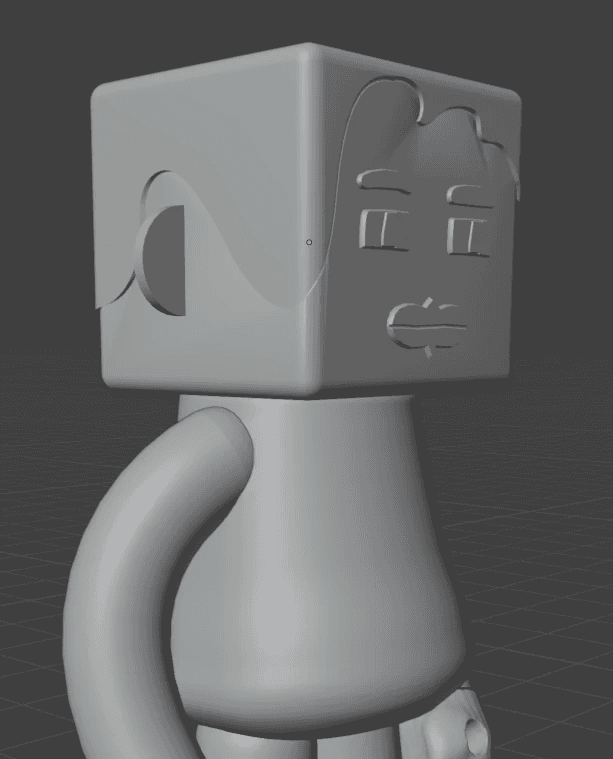
클라이언트로부터 원하는 스타일의 2D 스케치를 전달받아, Blender를 통해 직접 3D 모델링을 진행했다. 원화의 조형 언어—네모난 머리, 단순화된 이목구비, 레고를 연상케 하는 바디 비례와 관절 구조—를 3D 공간에서 충실히 재현하는 것이 첫 번째 과제였다. 동시에 실제 3D 프린팅과 이후 조립을 고려하여 머리, 몸통, 팔, 다리, 소품 등 파츠 단위로 모델을 분리 설계했다. 캐릭터의 개성과 완성 후 조형미가 균형을 이루도록, 각 파츠의 비례와 디테일을 반복적으로 조율하는 과정을 거쳤다.
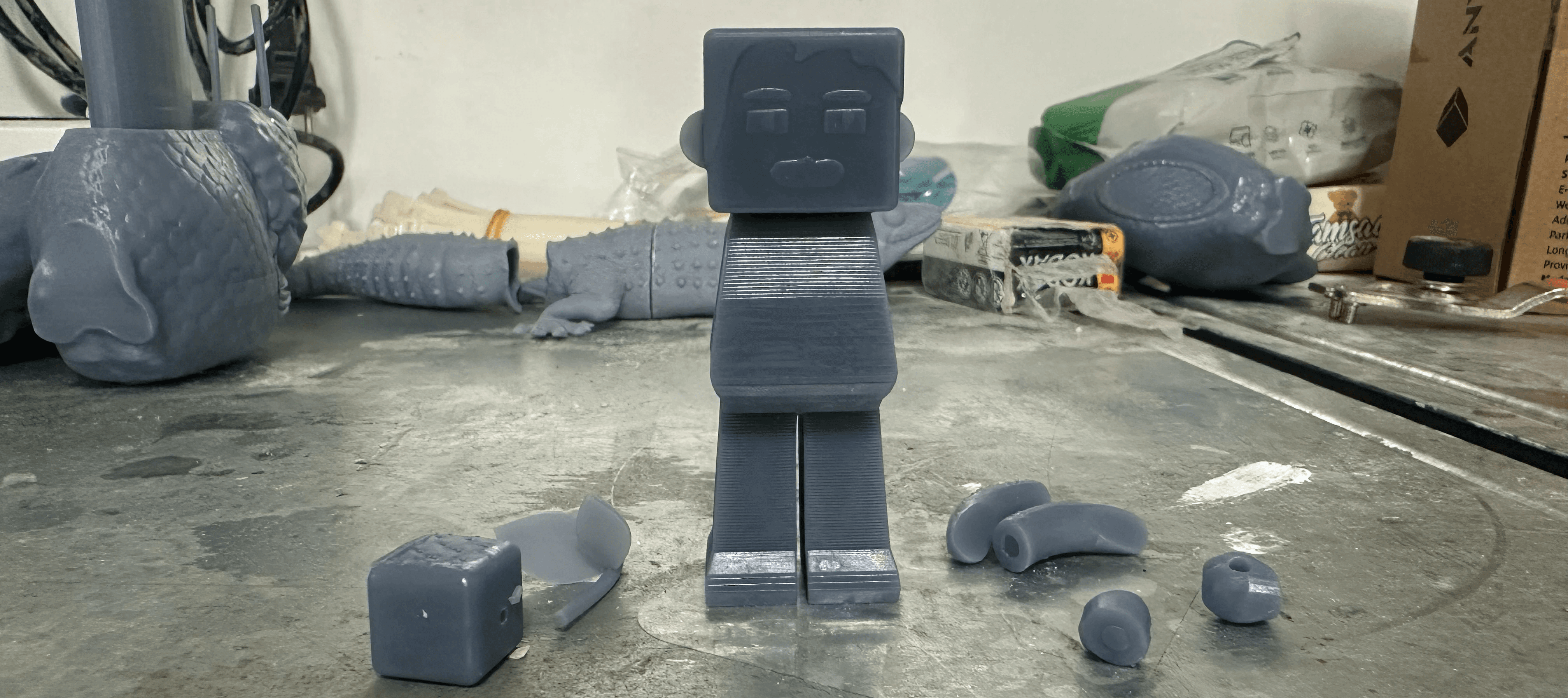
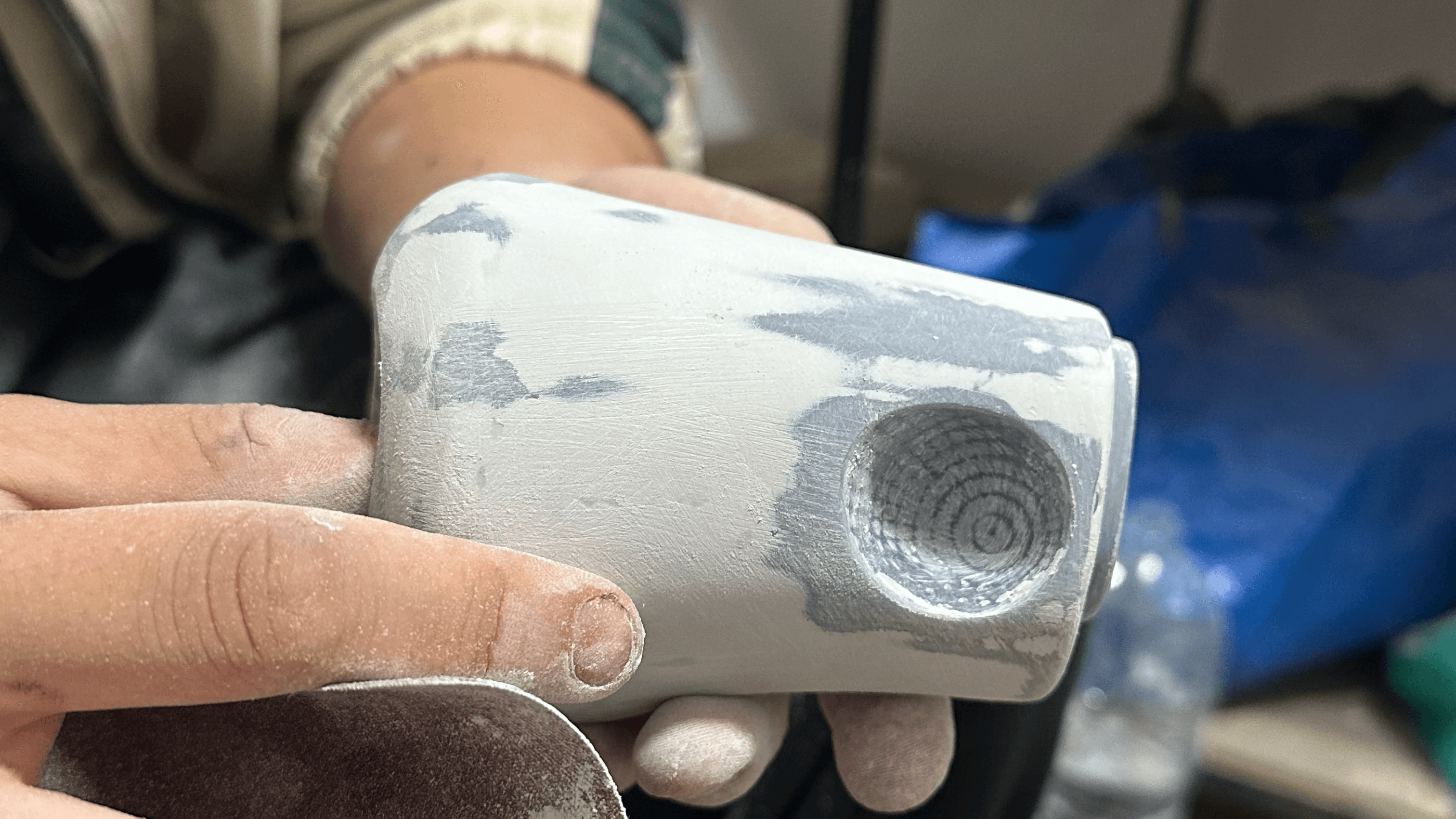
완성된 3D 모델은 파츠별로 분할하여 3D 프린터로 출력했다. 출력 직후 표면에는 적층 방식 특유의 레이어 자국이 남기 때문에, 사포 작업을 통한 표면 평탄화가 필수적이다. 이 단계는 단순한 마감 처리가 아니다. 사포질의 완성도가 도색 후 최종 표면 품질을 직접 결정하는 만큼, 각 파츠의 곡면과 음각 디테일을 따라 수작업으로 꼼꼼하게 처리했다. 특히 헤드 파츠에 새겨진 이목구비의 음각 라인은 면과 선이 만나는 경계를 정확하게 살려내는 것이 관건이었다.
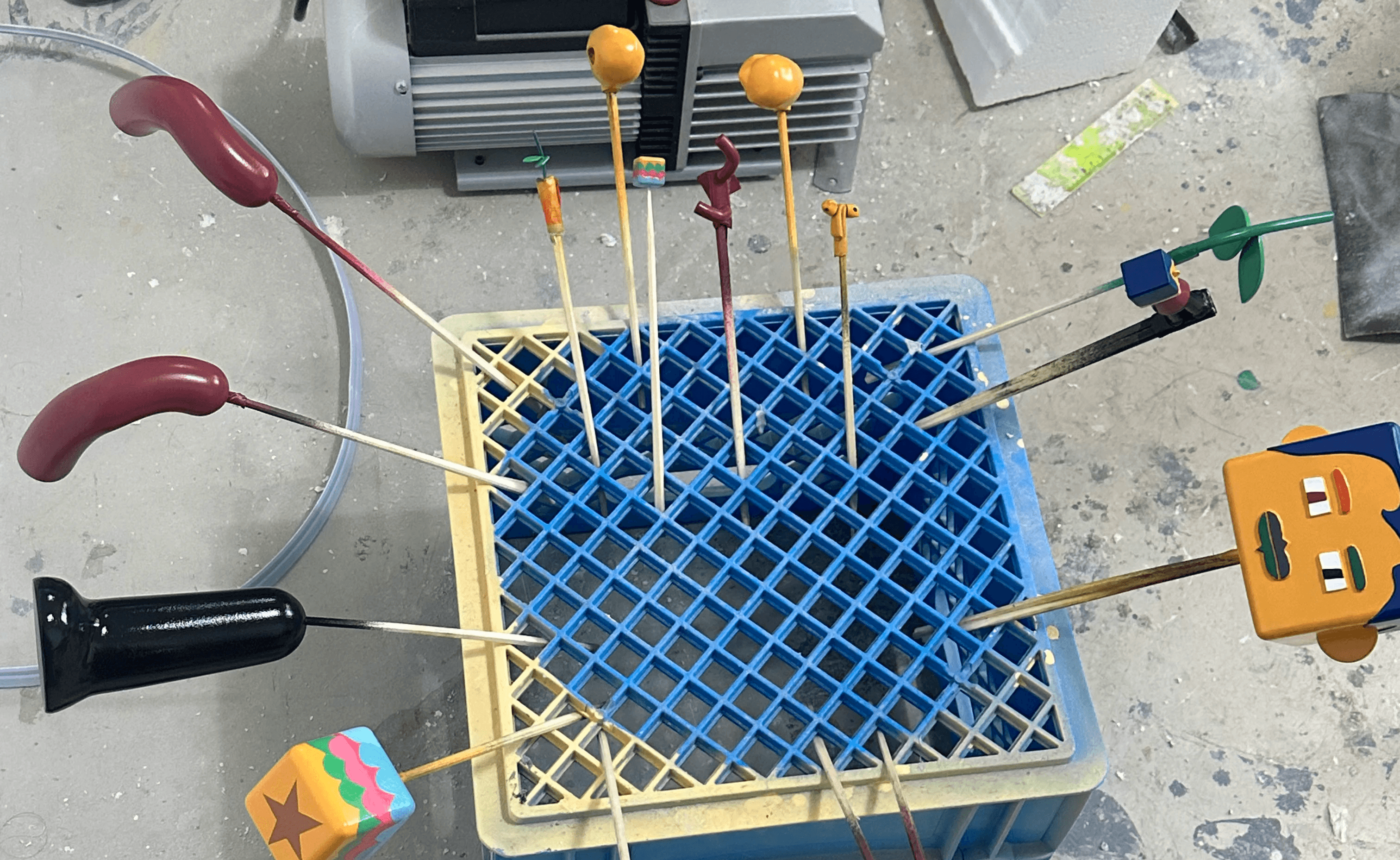
표면 처리가 완료된 파츠에는 신나 페인트를 사용한 에어브러시 도장을 적용했다. 캐릭터마다 파츠별로 색상이 달라지기 때문에, 도색 순서와 마스킹 계획을 사전에 면밀하게 수립했다. 각 파츠를 핀에 꽂아 건조대 위에 세워 작업하는 방식으로 효율적인 도장 라인을 구성했다. 신나 도장 특유의 발색과 표면 질감은 아트토이 피규어에 요구되는 선명하고 균일한 컬러를 구현하는 데 적합했고, 원화의 평면 색채 정보를 입체 표면 위에 정확하게 옮겨내는 데 집중했다.
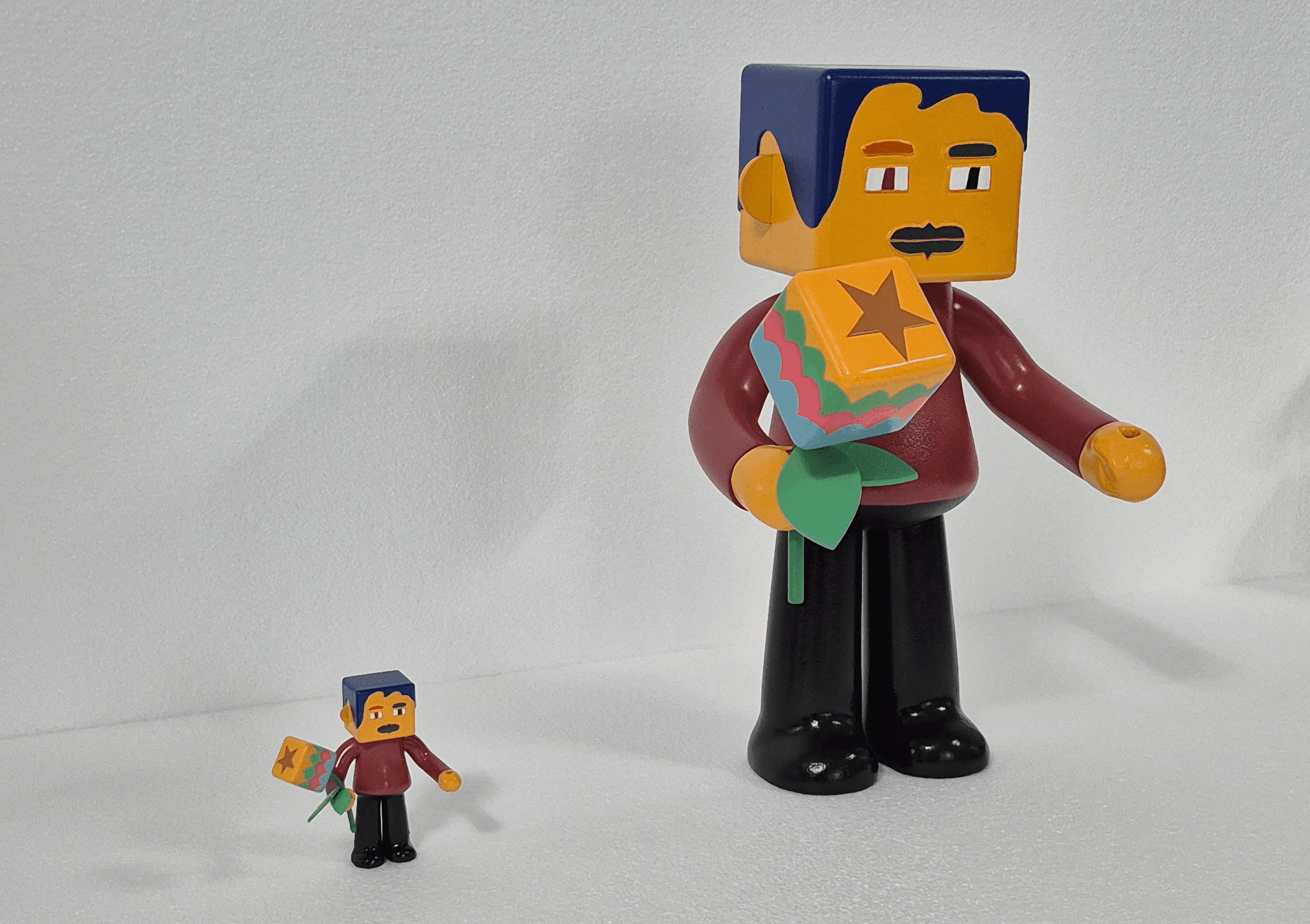
최종적으로 소형과 대형, 두 가지 사이즈의 피규어를 완성했다. 손 안에 쏙 들어오는 미니어처부터 존재감 있는 대형 사이즈까지, 동일한 캐릭터 조형 언어와 색채 정확도를 두 스케일에서 일관되게 유지했다. 완성된 피규어는 키뮤스튜디오가 발달장애인 디자이너들의 창작 IP를 새로운 소비 시장으로 확장하겠다는 비전을 오브제로 가시화한 결과물이다. Team Lorem은 이 프로젝트에서 클라이언트의 세계관과 조형 의도를, 3D 모델링에서 사포 표면 처리, 에어브러시 도색에 이르는 전 공정에 걸쳐 실물로 번역하는 역할을 수행했다.
Kimustudio is a Seoul-based social startup dedicated to expanding the creative ecosystem of designers with developmental disabilities. For their inaugural art toy series, KIMUNIVERSE, the studio set out to translate the 2D character IP of their NEMO CREW — Ki, Johannes, Roy, and Bob — into collectible three-dimensional figures. Characterized by geometric square heads, simplified facial expressions, and LEGO-like body proportions, each character embodies the visual language developed by Kimustudio's designers. Team Lorem was commissioned to handle the full fabrication pipeline, from 3D modeling in Blender through final airbrush finishing, giving physical form to this expanding IP.
The process began with 2D style sketches provided by the client. Working in Blender, Team Lorem built full 3D models for each character — translating the flat graphic identity into sculptural form while preserving the geometric clarity of the original artwork. The square heads, precisely rendered facial features, and compact body ratios all had to remain visually intact in three dimensions. At the same time, each figure was engineered as a set of discrete separable parts, designed with 3D printing tolerances and final assembly in mind. Proportions and surface details were iterated through multiple rounds to ensure the character's personality transferred cleanly from screen to object.
With the models finalized, each figure was divided into individual components and output via FDM 3D printing. The printed parts arrive with characteristic layer lines from the additive process, requiring thorough hand-sanding to achieve the smooth surface finish expected of a collectible figure. This step is not merely cosmetic — surface quality at this stage directly determines the precision and uniformity of all subsequent paint work. Concave details such as the facial features carved into the head pieces demanded particular care, with each edge and recess worked by hand to preserve the intended geometry without losing depth.
Once sanded, each part was finished using lacquer-based airbrush painting. The color scheme varies across parts and between characters, making sequencing and masking a critical planning step. Parts were mounted individually on pins and arranged on a drying rack, allowing multiple components to be processed efficiently without compromising paint quality. The lacquer finish delivers the clean, saturated color and consistent sheen appropriate for art toy collectibles, closely matching the flat graphic palette of the original 2D works.
The completed figures were produced in two scales — a miniature and a larger collectible format — with the same character language and color accuracy applied consistently across both sizes. The finished pieces stand as the physical extension of Kimustudio's creative IP: works originally conceived by designers with developmental disabilities, now realized as collectible objects entering a commercial market. Team Lorem's role throughout was to serve as the technical and craft bridge between the client's visual world and the finished object — from polygon mesh to paint.